Finding the resonant wavelength
Listening for what wants to emerge
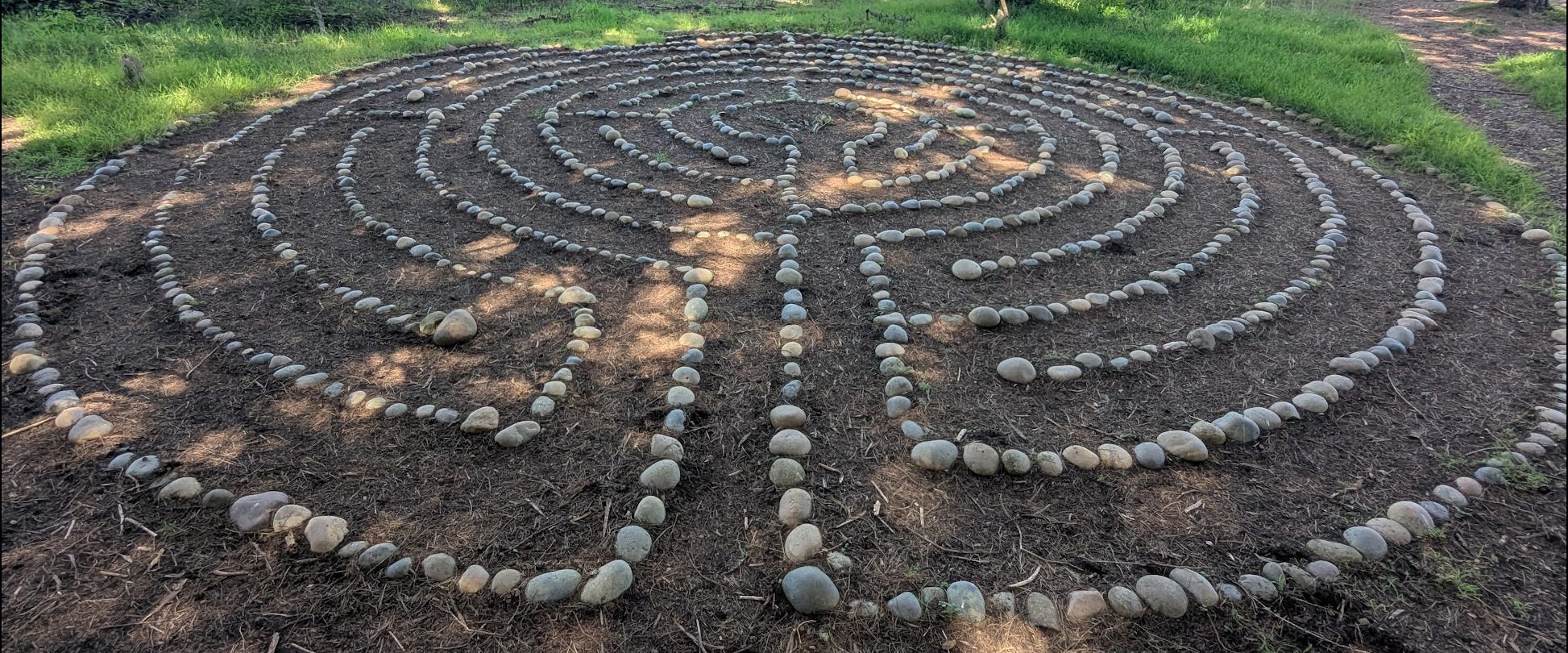
It’s a wild time to be alive. So much to say/feel/do, and—for me—not enough time to write. In lieu of a normal post exploring a specific topic, today I want to share a few of the threads I’m holding and weaving in this moment: each of which is a newsletter topic in its own right. Some of these I will develop into full posts as time and life permit.
Introducing a “Politics of Belonging”
This has been the primary focus of my professional energy these last few months. A partnership with friend and thought partner john a. powell of the Othering & Belonging Institute in service of organizing coherence to help build a bigger tent to expand the pro-democracy movement. It’s an intentionally transpartisan play, an effort to operationalize my longing for a movement for the 100%, under the boundary condition of john’s invitation to “belonging without othering.” We’re inviting everyone to locate their work inside this frame, and to adopt that core commitment to not othering in our campaigns, our organizing, and our narratives.
The focus for 2026 is primarily within the U.S. to leverage the 250th anniversary and influence the midterms, especially as the Trump coalition is fracturing around Epstein and Iran in particular. But we very much hold a global aspiration; we are planning to host a salon/conversation in Berlin this July to explore how this invitation may resonate there. Our Concept Note isn’t quite ready for public distribution, but I welcome expressions of interest if you/your organization would like to partner.
Much more to say in the coming months. In the interim, I invite you to practice interdependence by checking out work from partners like Next250, this beautiful invitation to civic joy from Connie Razza’s team at Future Currents/United Democracy Alliance, or to join Garrett Bucks’ 50 potlucks in 50 states tour :-)
Ultimately, I hope you all will join us!
Articulating a principle of Protective Force
This will be my next newsletter post. It’s this feeling I’ve been wrestling with in an existential way since Renee Good was murdered: in the face of escalating violence, we must respond with escalating nonviolence. It is my effort to try to resolve the quandary and tension I experience between three principles that I hold dear:
A deep commitment to protecting life
A deep commitment to transformation, embodied in a deep commitment to nonviolence as both moral principle and strategic imperative
A deep desire to live; I don’t want to die, or be a martyr
What, therefore, is our guidance to act in the face of the state’s willingness to use lethal violence with impunity? This is an extension and deepening of the question I took up here, and my effort to articulate a principle I am calling “protective force.” Not violence, but force.
I’m drawing on Gandhi’s concept of satyagraha (itself influenced by the Bhagavad Gita); Walter Wink’s work on responding to domination; the philosophical underpinning of the martial art of aikido; and my interpretation of Jesus, particularly the “temple cleansing” discussed in the gospels.
Perennial Sunflower: inviting white men to transform
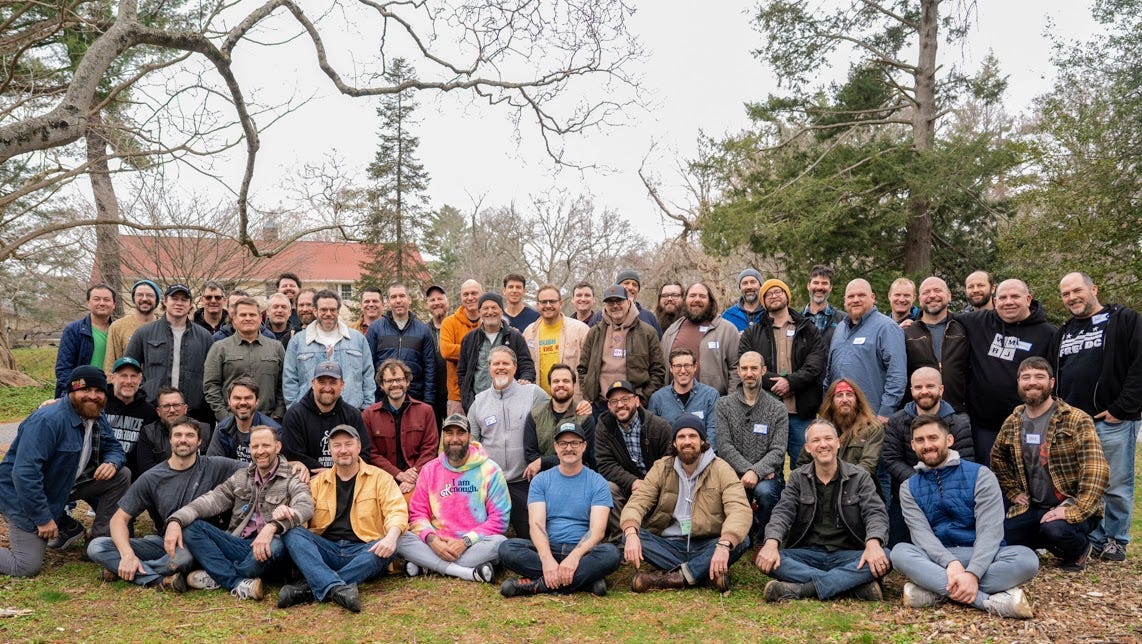
I attended two beautifully held convenings in the last couple months. The first was convened in late March by Garrett Neiman, Otis Pitney, and Chris Crass, initiators of a field-building effort called Perennial Sunflower. It’s an effort to build coherence and connect the many different white men who are organizing other white men toward justice. It was a beautiful gathering held at Pendle Hill, a storied Quaker Retreat Center west of Philadelphia, featuring a number of organizations doing deep work, and some individuals whose work I’ve been following and influenced by for years.
It was a treat for me to show up as a participant and not convener: I know intimately how hard field-building is, trying to connect across difference and bring coherence to something that is still emerging. Big props to Garrett, Otis, and Chris: especially cool to witness Chris’ facilitation; he’s one of the OGs in the white male organizing space and has dedicated his life to it.
Most of my work is—by intentional design—in multiracial and multigender (and usually multinational) space. And: I think white male organizing is absolutely essential; we (the “left” or people committed to social justice) have been getting crushed here, leaving many alienated white men ripe for recruitment by authoritarian actors. Lots of takeaways, but I want to name two here:
Jonathan Smucker—whose book Hegemony How-To made my best-of list back in 2018—offered a beautiful presentation (a preview of his forthcoming book) articulating a theory of what he calls “inclusionary populism.” It’s brilliant. And: I found myself wanting to marry it with a Politics of Belonging, and try to blend inclusionary populism (which explicitly pivots on the creation of an “other” in the form of the plutocratic 1%) with belonging without othering (naming the villainy without “othering” the villains). I think it can be done, and it will be the cornerstone of the electoral strategy I see as the expression of a Politics of Belonging.
I listened all week for what I call the “resonant wavelength.” That nugget or memetic kernel that captures the zeitgeist, that can carry across contexts. I would be going straight from Pendle Hill to the North Bay for a convening organized around the climate crisis and AI… what might connect these two gatherings? On the third day one of the men—from a cool initiative called Real Men’s Circles, a working-class-centered intervention—said it simply and it landed in me as the thing I’d been looking for: “We show up for our brothers.” That to me feels like the essence of 2026, and the thing that gives me hope. The challenge: expanding our conception of who we consider “our brothers”… and what it means to “show up.”
The EarthKind Collective: confronting the Metacrisis
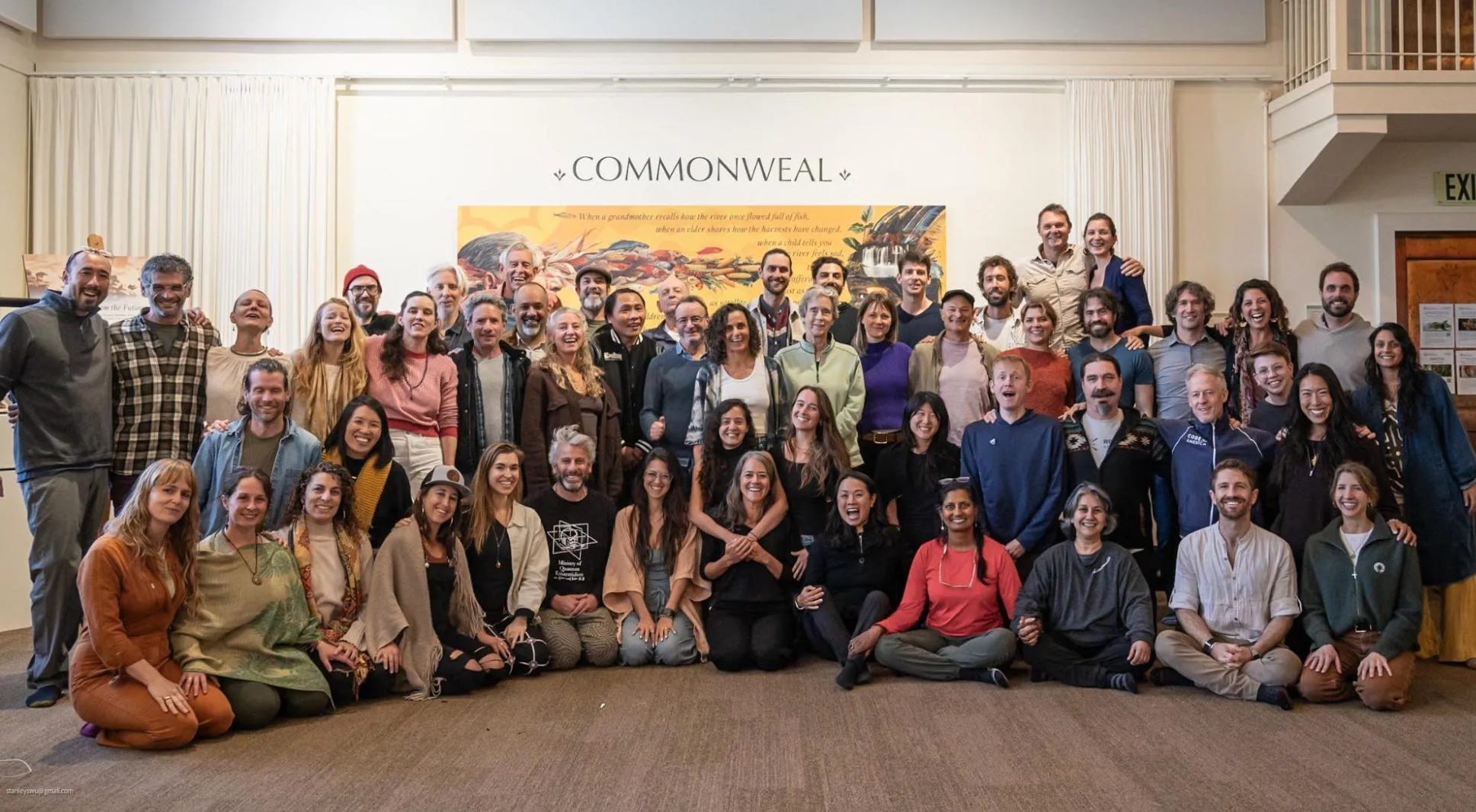
From Pendle Hill I was home in Seattle for a week before heading down to another beautiful retreat space: this time for the third gathering of the EarthKind Collective, held at Commonweal. EarthKind was incubated at the One Project by Evan Steiner, a friend of mine and participant in one of Building Belonging’s transformative philanthropy cohorts. Evan is probably the closest person I’ve found to someone working from my own theory of transformation: I see him practicing the art of systems curation, focused on identifying leverage points for transformation at scale.
The EarthKind Collective is explicitly organized around a deep understanding of the metacrisis: such a treat to be among kindred spirits confronting the massive scale of the problem. Lots more to say here, but here’s my very short summary of the core idea.
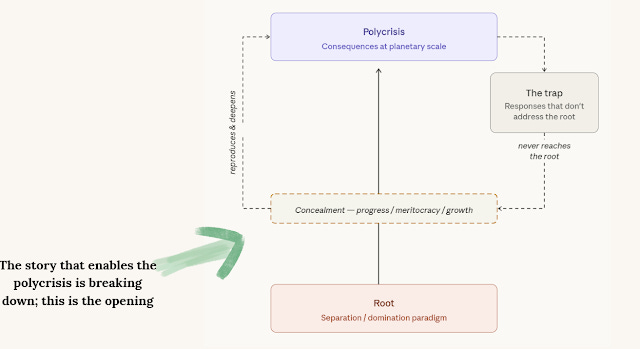
The “polycrisis” is the term that refers to the many crises we face, and the idea that they are interrelated (the climate crisis drives migration, which stresses social systems, which contributes to authoritarianism, which increases racial violence, etc).
I see our current crises (the polycrisis) as the inevitable result of an underlying paradigm/worldview of domination and separation. A worldview that sees the Earth as a “resource” to be exploited will inevitably destroy that “resource” (so too with humans seen as “other,” etc).
When we attempt to solve the polycrisis from within that same mindset (domination and separation), we inevitably fail, because we are only addressing the symptoms and not actually the root cause. This is the idea of the “metacrisis”: our approach to the polycrisis IS ITSELF part of the crisis.
They have a beautiful summary/strategy doc that isn’t yet ready for sharing, but it’s a brilliant contribution to the field (building on work by folks like Rufus Pollock, here). I have a slightly different take with some important nuances, which I’ll elaborate once the doc is public so we can grapple with it together. In the interim, here’s the graphical depiction I made (building on Rufus’ schematic) with how I understand it:
Lots more to say about what transpired there, but the main thing for me was grappling for the first time in a deep way with existential AI risk. We heard a breathtaking and deeply disturbing presentation from Stuart Russell—an AI OG who literally wrote the textbook—on the state of AI and the arms race to super-intelligence (when AI breaks free from human control and begins making its own decisions… which without safeguards in place could be an existential risk to humanity). It hijacked my nervous system for hours… and honestly took a full two weeks before I was able to metabolize what I’d heard into something I could hold.
That’s the bad news. The good news is I think AI can become one of those issues that lets us see clearly the best and worst of humanity: our brilliance, and our breathtaking hubris. While we were there One Project Founder Justin Rosenstein published a piece in Fortune arguing that AI ought to be regulated as a planetary commons: by the people, for the people. There is a huge supermajority of people who agree: that this technology is too powerful/dangerous to be left in the hands of a small plutocracy whose interests are aligned with short-term profit and not long-term life. AI, in other words, is a stress test for whether we're capable of building an economy that belongs to all of us.
I think this provides an opportunity to articulate what I am calling an Economics of Belonging (with due respect to Martin Sandbu’s book with that title, I am not trying to rescue capitalism but to transcend it). It’s about embodying the principles of belonging in our economy: ensuring that our economy is aligned with life and honoring all beings. Crucially: an economics of belonging has to be situated inside of a broader Politics of Belonging, one that also addresses core questions of identity, healing/reparations, and justice. I disagree with those who try to choose one side of the class vs race debates: it’s both, and we must attend to both material/economic AND social/identity concerns.
Confronting the billionaire class
Building on this idea of existential AI risk driven by a handful of billionaires (and the companies and politicians they are influencing with those billions) is a broader question that is gaining urgency: how do we engage the billionaire class?
This question took sharp relief for me this week listening to a Daily podcast on political violence in America, where Robert Pape described what he called one of the two most significant political shifts of this generation:
A shift of wealth to the top 1 percent, which starts in the mid 1980s. It doesn’t matter which party is in power, wealth is being shifted from the bottom 90 percent to the top percent… And it’s coming out of the entire bottom 90 percent, pretty much evenly at the different quintiles.
This is extraction and theft: the inherent logic of domination, expressed through racial capitalism and its current expression in the destructive ideology of neoliberalism. I see this as absolutely catastrophic for pretty much everything: the concentration of power at the top is destroying democracy, contributing to popular immiseration and a deep sense of precarity and scarcity among the 90%, and to Pape’s point—it is driving political violence. All present trends will only exacerbate this, the AI race chief among them (the Silicon Valley class now saying the quiet part out loud in talking about a “permanent underclass”). I don’t see any path forward that doesn’t require both stopping this trend AND reversing it.
Scot Nakagawa had a great piece on this as the central fault-line of this moment, and potentially a transpartisan frame we can organize around: what he calls “concentrated power vs distributed power.”
I’m interested in extending the logic of my “protective force” principle into the economic sphere as well. If we understand this phenomenon—rightly—as the destruction of life at scale… how then shall we respond? There’s a fine line here: we need to refuse to dehumanize them (I see billionaires as symptom, not cause)… while refusing to allow their harm to continue.
The metaphor that feels most apt here is thinking about extreme wealth as an addiction, and thinking about the billionaire class as people suffering from addiction. It impairs their judgment and can lead to serious collective harm. Indigenous people have a name for this: what they called the “wendigo” or “wetiko” virus. It was their way of explaining the self-destructive behavior of early colonists who showed such casual disregard for the commons. Alnoor Ladha and Martin Kirk wrote a great piece on this, explaining how the logic of supremacy can become embedded within us: many of these billionaires I see as “infected” by wetiko.
In the case of the ultra-rich, there’s evidence that extreme wealth/power has an active corrosive effect on pro-social behavior: it functions like a disease (this idea informed the launch of the Excessive Wealth Disorder Institute). Witness Elon Musk calling to eliminate empathy, or Marc Andreessen’s declaration that he doesn’t engage in self-reflection. It is no accident that these men are actively seeking to distance themselves from the qualities that are perhaps most central to what it means to be human; it is our responsibility to ensure that they do NOT have the power to make decisions that affect the rest of us.
This is what I’m hoping to get at in articulating a principle of protective force, and its policy implications (wealth tax, negative income tax, eminent domain to reclaim commons assets, etc).
In search of agency
Another wavelength I’m picking up that I want to name before I close: an emerging recognition that part of how we respond must be to reclaim agency. Our organizing must support people in accessing their intrinsic power. This is a truism of organizing… and a lesson we (including me!) too often forget. This seed was planted reading this provocative piece from Samuel Hammond “Think Tanks Have Defeated Democracy” (hat-tip to my colleague and friend Christina Antonakos-Wallace for flagging). It’s a pretty savage critique of how we (I’m focused on the implications for the progressive/social justice “left,” which I consider myself a part of) have allowed the logic of neoliberalism to colonize our work.
In particular it has led to what political scientist Theda Skocpol calls “associations without members.” Meaning: we are speaking “on behalf of” without “in accountability to.” We—and I very much implicate myself in this critique—have (unintentionally/inadvertently) robbed people of their agency. Of their chance to directly inform the process and outcomes that affect their lives.
While thinking about this I listened to a delightful podcast interview with Savannah Bananas founder Jesse Cole, in which he dropped this nugget:
Nothing matters more than making people feel like they matter.
This feels like the piece we’ve been missing, and the piece we’re slowly remembering. When we say none of us without all of us, the “all of us” need to be actively involved, asserting agency, reclaiming power from victimhood.
I look forward to claiming more space for slowness, for reflection, and for writing. Thanks for bearing with me. I’d love to hear what wavelengths you’re picking up, what signals are breaking through the noise, and what is giving you hope and inspiration in this moment.
Our next subscriber gathering will be Monday, May 18th @ 9am PT (noon ET, 5pm UK, 6pm CET/CAT, 9:30pm India). This one will be open to all subscribers. If you are interested in joining, please RSVP here. These are informal small-group gatherings to practice bridging toward belonging: come as you are!
In community,
Brian
This is a great piece. Lots of amazing resources in here for those of us trying to drill down to the ACTUAL problem that binds all of our 21st-century crises together. It gives me hope that so many people are quietly working to raise their awareness of this and helping others to do the same in both big and small ways. Let's hope pro-social values win out in the long run. I'm feeling pretty dejected about everything that has been going on in the past decade, but there may be hope for our species yet.